As Senegal grapples with a deepening economic crisis, the Biennale of Contemporary African Art opened in Dakar on Friday with a theme of turning vulnerability into strength and positioning art as a resource for navigating turbulent times.
The exhibition, founded in 1989 by the Senegalese government to promote the continent’s thriving art scene, has over the decades become one of the most important among African artists.
Every two years, Senegal’s picturesque capital puts on its best clothes and welcomes hundreds of artists, curators and art lovers from across the world who mingle, network and admire art against the backdrop of palm trees and to the soundtrack of popping Champagne bottles.
This year's theme, "(Anti)fragility,” explores how to embrace vulnerability and turn it into power for change, said Morad Montazami, the event's artistic director.
"It's a paradoxical concept. We put ‘anti-’ in parentheses because, to be ‘anti-fragile,’ you must first embrace or accept fragility,” he said. "When something breaks or shatters, it’s considered fragile. When something withstands shocks, we say it’s robust. But there’s a third scenario: one where, as a result of a shock, you actually become stronger.”
The theme resonates across the region, which is struggling with economic shocks and identity crises, navigating its place in the new global order. In Senegal, costs of living have skyrocketed as the government wrestles with a massive debt, and thousands have undertaken the treacherous, irregular route to Europe through the Atlantic Ocean, making headlines over recent tragic shipwrecks.
That makes it even more vital for artists to create, gather and exhibit, Montazami said.
"Crises give rise to new systems of thought,” he said. "So these are also moments of rupture - moments where we can attempt to conceive something new.”
The main exhibit displays works of 54 artists and 22 designers from Africa and the African diaspora. Alongside the official programme, over 450 pop up exhibitions are held in various venues, from suave five-star hotels to low-key neighbourhood galleries.
On Friday, the first day open to the public, international crowds of tourists, academics, artists and curators roamed the halls of the slightly decaying yet still majestic former courthouse in Dakar, which hosts the flagship official selection.
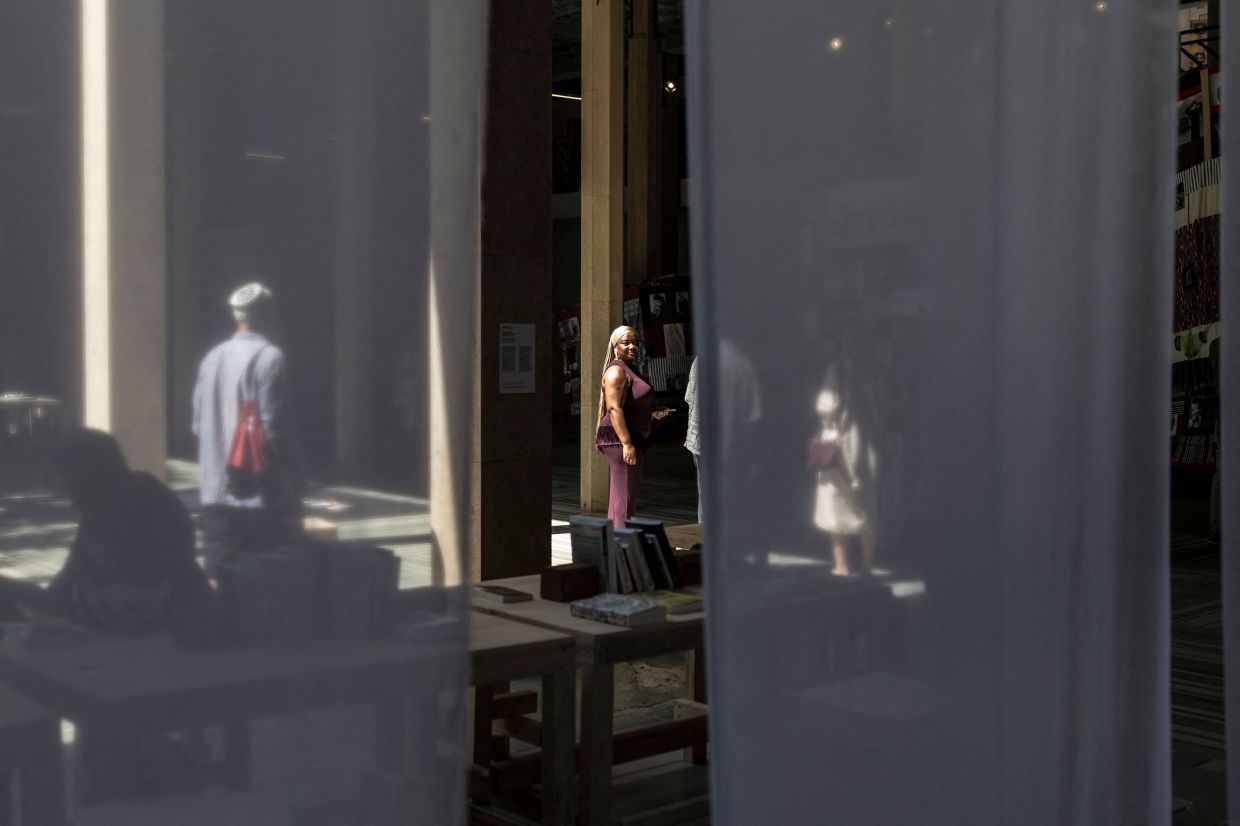
Claire Whitner and Samantha Cataldo, curators at the Worcester Art Museum in Massachusetts, travelled to Dakar to scout for new African artists.
"Our city has a lot of West African immigrants, and so we want our collection to be able to respond to what our community looks like," said Cataldo.
"For now, the collection doesn’t have a strong representation of African art. And at this moment in history, it feels unethical to collect traditional African art - and there’s so much opportunity to think about contemporary art in Africa.”
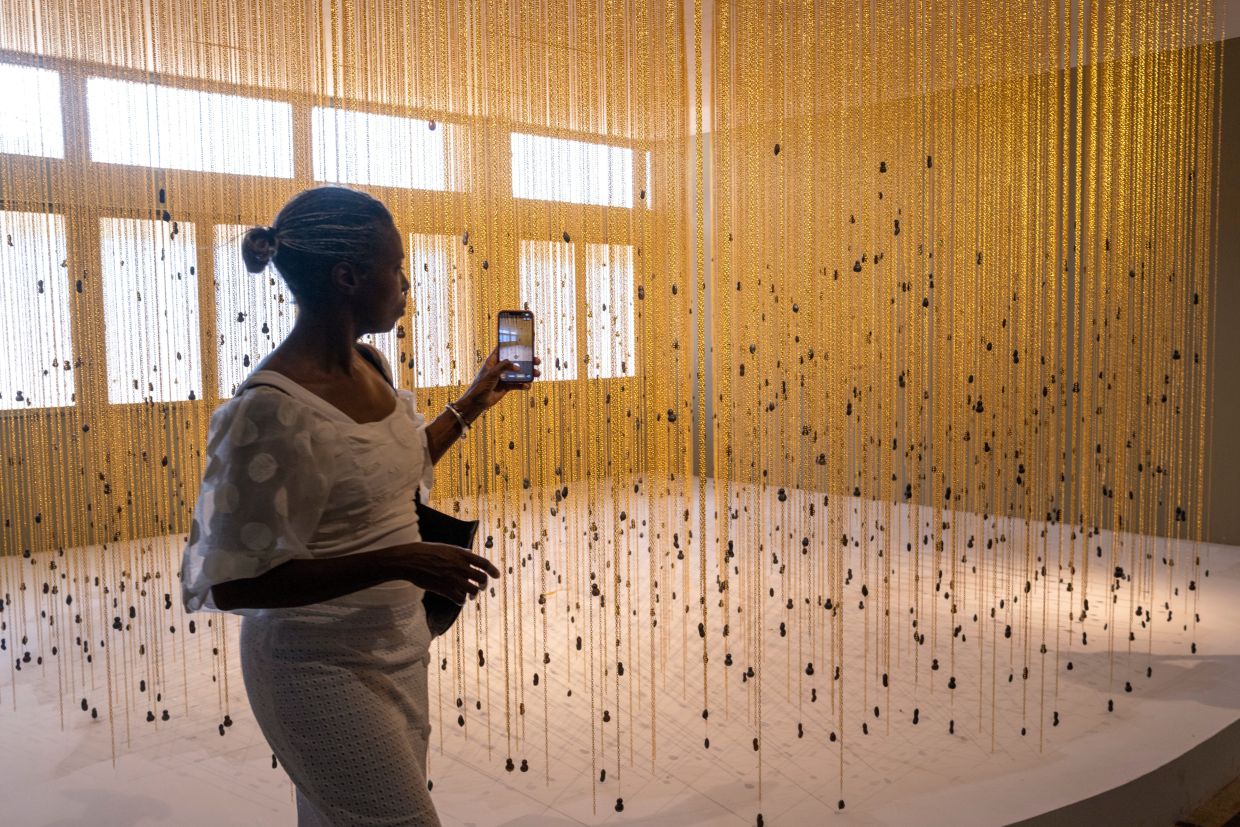
The art on display varied from an installation of thousands of silkworm cocoons to intimate watercolor paintings representing the fragility of human body, large canvases depicting joy and pain of motherhood, and modern marblelike centaur statues.
Jean-David Nkot, an artist from Cameroon, reimagined the ancient Greek monster Hydra, famous for regrowing new heads whenever one was cut off, as gold miners in east Cameroon. Across West Africa, governments are taking steps to reclaim control over their natural resources - yet the working conditions of miners remain poor.
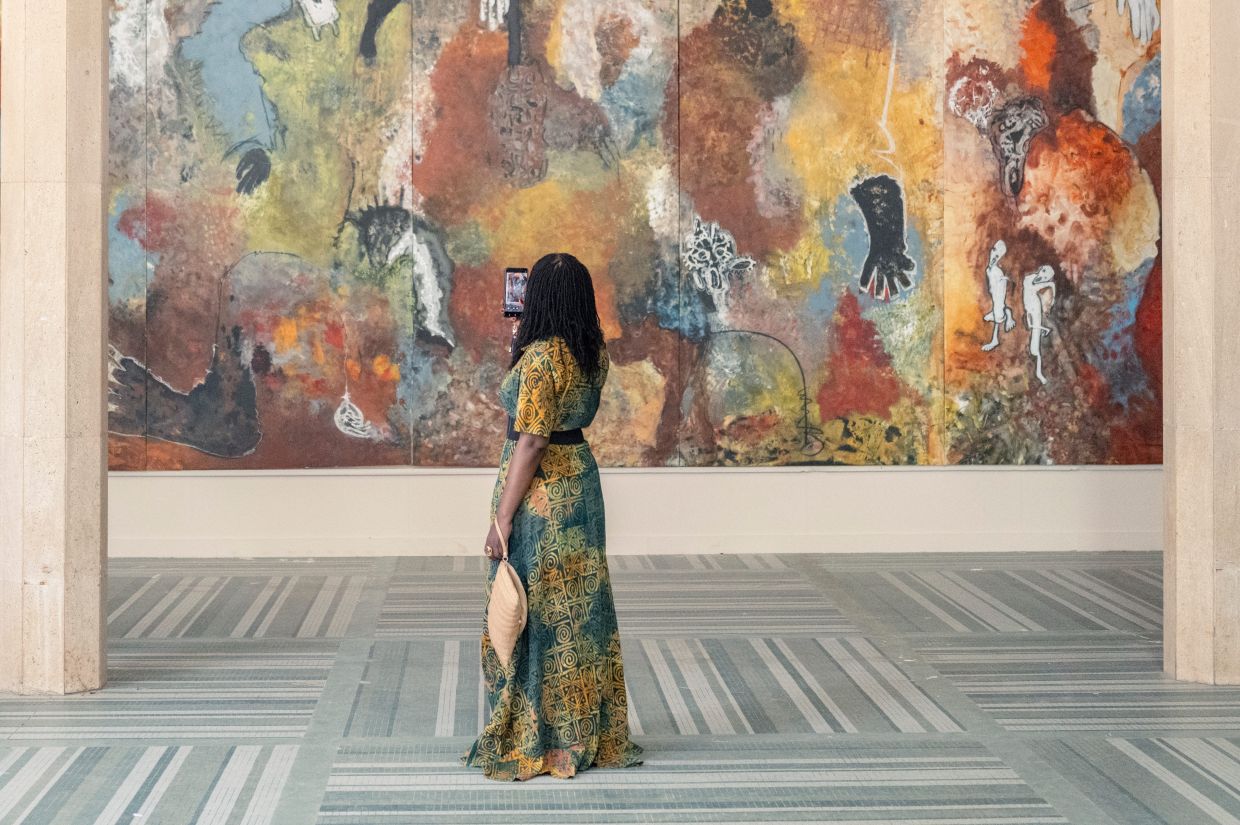
"I wanted to show the ability of bodies to overcome and to re-create themselves in the context of confinement and suffering,” he said.
"The living conditions of these miners are so improbable that I want to show the strength that they bring to society, and show how that even in the most difficult times, they manage to surpass themselves and rebuild themselves.”
The official exhibit also features work of patients from Senegal’s psychiatric hospitals and marginalized groups, as well as a big section dedicated to children, pushing the boundaries of who can call themselves an artist.
Montazami, the artistic director, insisted that art was a necessary resource, even more so in the times of crisis - not just for the fortunate few, but for everyone.
"At its core, our struggle is about demonstrating that art is not an accessory - that it is not a luxury,” he said.
"Ultimately, it is a common good and a resource.” - AP